
About & FAQ
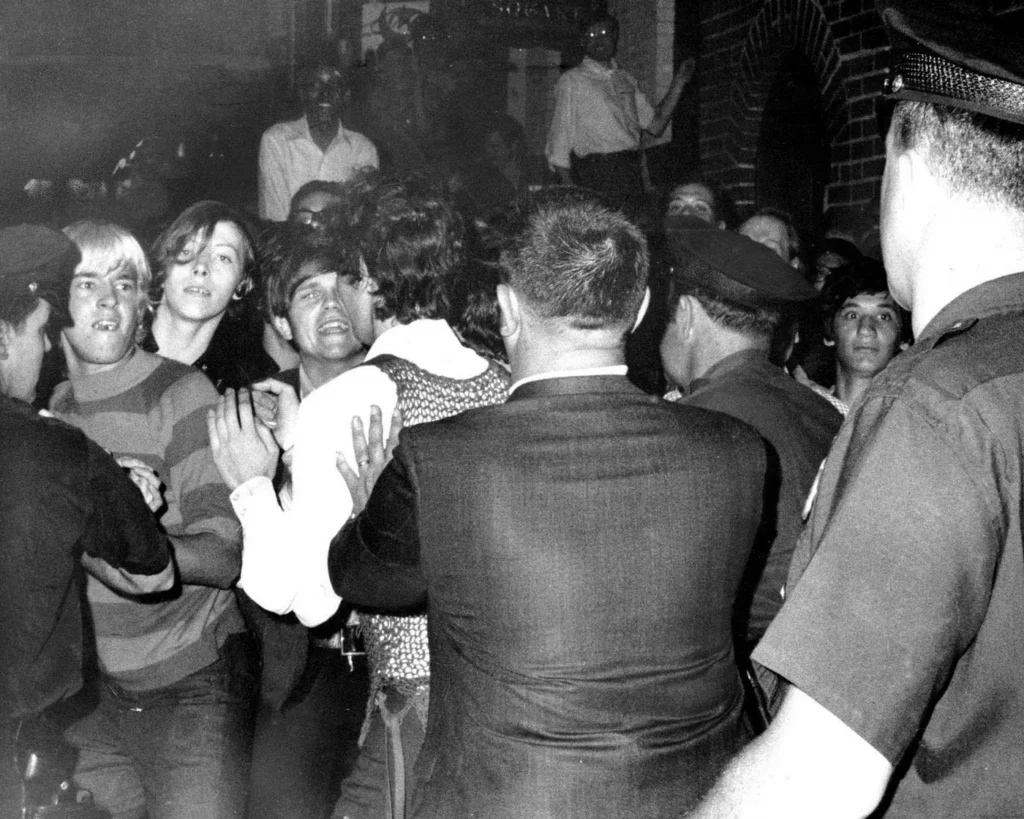
Stonewall Forever was created in 2019 through a partnership between NYC’s LGBT Community Center and the National Park Service, with the support of Google to expand access to LGBTQ history in commemoration of the 50th anniversary of the Stonewall Riots.
We hope that this effort lifts up a broad array of voices and creates a connection to Stonewall’s legacy for people everywhere.
Where did the historical pieces in the collections come from?
The content is a variety of materials from multiple sources, including The Center’s National History Archive, multiple archives and public institutions, the Stonewall National Monument Oral History Project, the Stonewall Forever documentary and more.
The LGBT Community Center would like to acknowledge and thank the following organizations and filmmakers for the generous contribution of their content:
- Google Arts & Culture
- Elliott Jerome Brown Jr.
- Fred W. McDarrah/Getty Images
- The Associated Press
- Making Gay History, www.makinggayhistory.com
- James Wentzy
- Lester Echem
- Randolfe Wicker
- Suzanne Poli
- The Peter Hujar Archive
- New York Daily News Archive/Getty Images
- Bettmann/Getty Images
- Lee Balterman/The LIFE Picture Collection/Getty Images
- Larry Morris/The New York Times/Redux
- NBC News Archives
- John Filo/Getty Images
- Bill Eppridge/The LIFE Picture Collection/Getty Images
- David Surber & Network Q Productions
- UCLA Film & Television Archive
- Print Media
- Screenocean/Reuters
- ITN/Getty Images
- AFPTV/Getty Images
- Library of Congress
- Mirrorpix/Getty Images
- Chaloner Woods/Stringer/Hulton Archive/Getty Images
- Schlesinger Library, Radcliffe Insistute, Harvard University
- Lilli Vincenz, “Gay & Proud”, Christopher Street Liberation Day Parade, 1970 & “Second Largest Minority” by Lilli Vincenz.
- on granted by The Mattachine Society of Washington, DO.
- Footage from “Queens at Heart” provided by Oddball Films
- Footage of Sylvia Rivera’s Speech at the 1973 NYC Gay Pride March Rally courtesy of The L.O.V.E. Collective, (Lesbians Organized for Video Experience) NYC (1973-1976) Original Members: Betty Brown, Delia Davis, Tracy Fitz, Barbara Jabaily, Doris (Blue) Lunden, and Denise Wong. Special Thanks to The Lesbian Herstory Archives (www.lesbianherstoryarchives.org, LHEF, INC)
- Lesbian Tide cover from Jeanne Córdova Papers and Photographs, Coll2008-064, ONE National Gay and Lesbian Archives, Los Angeles, California
- Photos by Bettye Lane, courtesy Lesbian Herstory Archives
- Photos by Kay Tobin, Manuscripts and Archives Division, The New York Public Library
- Photos by Diana Davies, Manuscripts and Archives Division, The New York Public Library
- Photo by Nancy Tucker, copyright Lesbian Herstory Archives
- Sound Clip Audre Lorde courtesy Lesbian Herstory Archives
- Mattachine Society, Inc. of New York Records, Manuscripts and Archives Division, The New York Public Library
- Drag Mag Cover Vol. 2 No. 5 (1972) from ONE National Gay and Lesbian Archives, Los Angeles, California
- “Rise of a New Conscience” article from ONE National Gay and Lesbian Archives, Los Angeles, California
- Barbara Gittings and Kay Tobin Lahusen, Harry R. Eberlin photographs, 1950s-2009 [bulk: 1970s-1980s], Ms. Coll. 4, John J. Wilcox, Jr. Archives, William Way LGBT Community Center
- Stonewall 25 Celebrations Memorabilia, #7587. Division of Rare and Manuscript Collections, Cornell University Library
What are the Stonewall Riots?
The Stonewall Riots were a series of spontaneous demonstrations by members of the LGBTQ community against a discriminatory police raid that took place in the early morning hours of June 28, 1969 at the Stonewall Inn in New York City. The Riots lasted five nights and served as a galvanizing moment for the LGBTQ activist community to unite in a nationwide movement fighting for LGBTQ rights. The following year of action culminated on the anniversary of the Stonewall Riots in the Christopher Street Liberation Day March, an organized march considered to be the first Pride.
The Stonewall Riots were commemorated with the designation of Stonewall National Monument in 2016, the first National Monument dedicated to LGBTQ rights and history.
Why are the Stonewall Riots a significant event in queer history?
In the 1960s, LGBTQ people faced regular and repeated social and legal discrimination and unfair treatment. On June 28, 1969 the New York City police raided the Stonewall Inn, a common police practice at that time for bars frequented by the LGBTQ community. But that night, instead of giving in, a group of brave individuals stood up. What followed was five nights of protests for LGBTQ rights.
The Stonewall Riots served to galvanize existing activism to demand fair treatment and equality, setting in motion the next 50 years of Pride. In the years after, LGBTQ rights organizations continued to spring up increasingly across the U.S. and around the world. On June 27 and 28, 1970, the first Pride marches commemorating Stonewall took place in New York, Los Angeles, San Francisco and Chicago.
Who selected the people and stories included in the collections and documentary film?
A team of researchers and archivists from the LGBT Community Center collected, selected and curated the content.
Who made the documentary film?
The documentary was created by the LGBT Community Center in collaboration with Stink Studios and director Ro Haber, with the support of Google.
How can I help the fight for LGBTQ+ rights?
Visit gaycenter.org/advocacy to learn how you can get involved and add your voice to conversations about current issues that deeply affect our community.